More Writing Advice: Believe in Yourself

Because no one else will.

At least not at first.

Late last night, after working my “day job” as a theater “roustabout,” I received the fantastic news that my screenplay, Unmasked, was chosen as a finalist for the Best Horror Feature Screenplay Award at the Oregon Scream Week Horror Film Festival. A few months ago, on a whim, I entered my screenplay into a bunch of film festivals. So far, I’ve heard back from two. It won fourth place at The International Horror Hotel, and now it’s up for another award.

Look for rainbows and you’ll find them.

I’m thrilled! Unmasked was the first feature-length screenplay I ever attempted to write, the first draft produced in a weekend fever dream over a decade ago. Since then, I’ve written many novels and other works, but Unmasked convinced me I could do it.

I don’t think there is one writer, professional or novice, who doesn’t feel a level of terror when facing the blank page. I’ve written about this before. There is always trepidation, the fear that you can’t do it. The only way to prove to yourself that you can do it is to sit down and do it.

Easy right? Not really. I think what holds most creatives back, and I’m certainly not immune, is that it takes a great deal of self-belief even to attempt a creative endeavor, let alone complete it and work it to some level of competence. Framed another way, you’ll never prove to yourself how incompetent you really are unless you try. The dreaded I suck! fear is probably the number one reason most of us make excuses about why we can’t do something.

I’m telling you, you can. But it takes work. And practice. Most of all, it takes belief in yourself. We’ve all seen examples of mediocre talents who’ve gone on to have tremendous success because of their unwavering confidence in their abilities. They shake off criticism like a dog after a dunk; they keep pushing forward no matter what. As annoying as some of these creatives are—Madonna, I have you in my sights—you have to admire their tenacity.

Conversely, there is another type of which many of us are all too familiar. You may count yourself among them. I’m referring to the creative person with immense talent who never seems to complete any project, or worse, has a self-destructive bent. I’ve seen it manifest in many ways. In fact, I’ve explored that destructive messaging myself in my work, including UNMASKED, which is essentially a horror story about a dysfunctional family. I know the territory all too well.

If you can turn your pain into art, people will respond to it.

Believing in yourself means showing up for work every day without expecting any accolades. Keep working and keep pushing forward. People will start to notice. You’ll gain fans and maybe even turn it into a lucrative venture. I’m still waiting for the latter, but in the meantime, I’ll keep working on it every day because I love it. If you are struggling with your creativity, start with self-belief and let the rest of the world catch up.
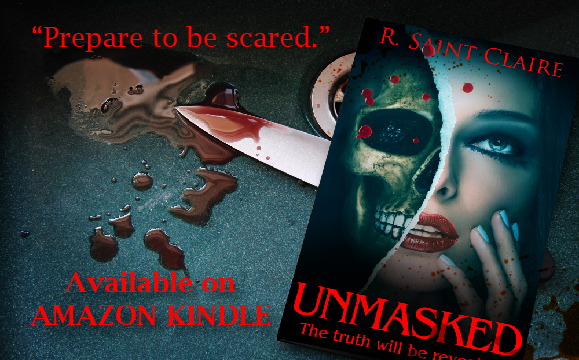
Read UNMASKED

Ten Writing Tips

I tend not to give writing advice because I’d rather leave it up to the true experts, but I thought I’d share Ten Writing Tips that have worked for me in my writing development. Most of these are not original (I’ll try to give credit where I can), but I’ve found them helpful. Here goes:

  1. Writing as Practice – I got this idea from Dean Wesley Smith’s YouTube channel, and I couldn’t agree more. Musicians practice every day, so why shouldn’t writers? Think of writing as practice and take the pressure off yourself. Learn while you practice and develop good writing habits.
  2. Daily Word Count – Set a daily goal and try to reach it. I keep a spreadsheet of my word count, and I’ve been averaging around 2000 words a day. If I keep it up, I’ll have a 60,000-word manuscript by the end of the month. That’s a short novel! It’s not as difficult as it sounds. Don’t wait for inspiration (see tip #1). Just sit down and write every day.
  3. Immerse Yourself in Language – You won’t improve if you don’t read. Read for pleasure, read for entertainment, but read every day. I read for an hour a day at least, and lately, I’ve become obsessed with audiobooks. Immersing myself in language makes me a better writer because I’ve learned to discern good prose from bad, to hear the musicality in a graceful turn of phrase. I may not be as good as (most of) the books I read, but they’ve given me a target for which to aim.
  4. Keep a Reading Journal – This sounds a bit nerdy, but I always try to keep a notebook handy, and when I read an interesting phrase or clever use of an active verb or mind-blowing description, I’ll stop what I’m doing and jot it down. Later, that verb that I never considered may find its way into my manuscript. Read (and listen to) good fiction and learn from the best!
  5. Keep it Active – I didn’t realize how much I was using the passive voice in my writing until I read Stephen King’s book On Writing. Now, I see it everywhere. He also advised against using adverbs, although I see he uses them quite often, at least in his early fiction. The problem with this type of advice is that there seems to be an entire generation of writers who now live in fear of the dreaded adverb or passive voice. Both have their place in the English language. Just don’t overuse them.
  6. Develop Your Own Style Naturally – One of my reader’s pet peeves is overwritten, purple prose that is trying too darn hard to be “fancy.” If I can’t find the story for all the filigree, I’ll put down the book. Each one of us has a unique voice. An excellent place to start developing yours is by writing clear and clean sentences that advance the story.
  7. Use All the Senses – Of all the five senses, I tend to neglect the olfactory variety, which is why I place a written reminder at my writing desk to add a smell every two pages or so. Nothing evokes emotion like a scent.
  8. Mistakes Are Inevitable – When you think of writing as practice, you’ll worry less about making mistakes. Mistakes are inevitable, so is bad writing at times. I once read a book on skiing that advised to always try to ski just at the point where you are falling. I was bruised by the end of my skiing adventure, but I think I improved more than if I hadn’t pushed myself to the edge. When I sit down for a writing session, I try to force myself to write a little beyond my skill level. Sometimes I surprise myself.
  9. Write a Clean First Draft – This tip may seem like it’s a contradiction of the previous one, but if you write a sloppy first draft, you may not be able to repair it in the second (or third) go-around when you can’t even remember what you were trying to accomplish in the first place. This is why I believe that setting an unrealistic word count can be counter-productive.
  10. Banish the Critical Voice – Nothing kills the creative spirit like that nagging, critical voice telling you how badly you suck! Save your inner “Karen” for polishing your prose, not in the creation of it. One way to beat the inner critic is by becoming so emotionally involved in your story, feeling it through all your senses, that there’s room in your writing space only for creative discovery!

Do you have any writing tips you’d like to share? Please leave a comment.

Rock n Roll Horror

Summer is the time for outdoor rock concerts. But lest you get bored between set-ups, make sure your day-pack includes a well-thumbed horror paperback. Horror and rock go together like coffee and cream, but with a lot more bite—especially if it’s a vampire story. Lestat de Lioncourt infamously became a rock star in the 1980’s.

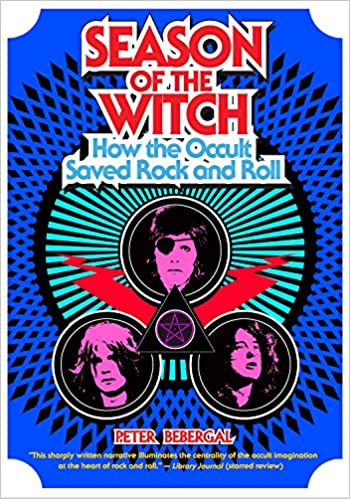
I’ve just kicked off a summer BookTube series highlighting some of the best in Rock Horror. The first video looks at rock and the occult, a subject with deep roots indeed. Luckily, the book Season of the Witch: How the Occult Saved Rock and Roll by Peter Bebergal is available to guide us into the underworld. The book is a treasure trove of rock and roll lore, and I drank it down like black mass communion wine in two days. Bebergal traces the roots of rock n roll’s connection with the occult from the crossroads of Mississippi to the flashy Hermetic images pulsing from the latest Hip-Hop videos. The book is an excellent read.

Postscript: a day after posting my video, the author Peter Bebergal contacted me to thank me for my review and graciously offered to send me a signed copy of his book for one of my giveaways. Just goes to show you, authors do read their reviews. Please tune to for my rock n roll horror series this summer for more book and film reviews and a chance to win a signed copy of Bebergal’s book!