
Book Review: Wretch: or, The Unbecoming of Porcelain Khaw by Eric LaRocca
I’ve been disappointed by new horror. I recently returned three(!) new library books I ended up DNF-ing. Now, one, I admit, was a new romantasy. I was curious about why it was so popular. After taking a dip, I still am. But the other two were recent horror releases. I got about 100 pages in on each and thought, “Since when did horror become so safe, so self-aware, so annoyingly pedantic, so—dare I say it—afraid?”
I don’t want soft cuddles when I read horror. I want high stakes, operatic peaks, hatred and self-loathing of the most abominable kind, spectacular crashes into burning pits of hell! I want blood spilling out on the page by someone who understands my suffering, who dares to go there. To quote Blanche DuBois, “I want magic!” albeit of the gruesome kind.
LaRocca brings the dark magic, and then some!
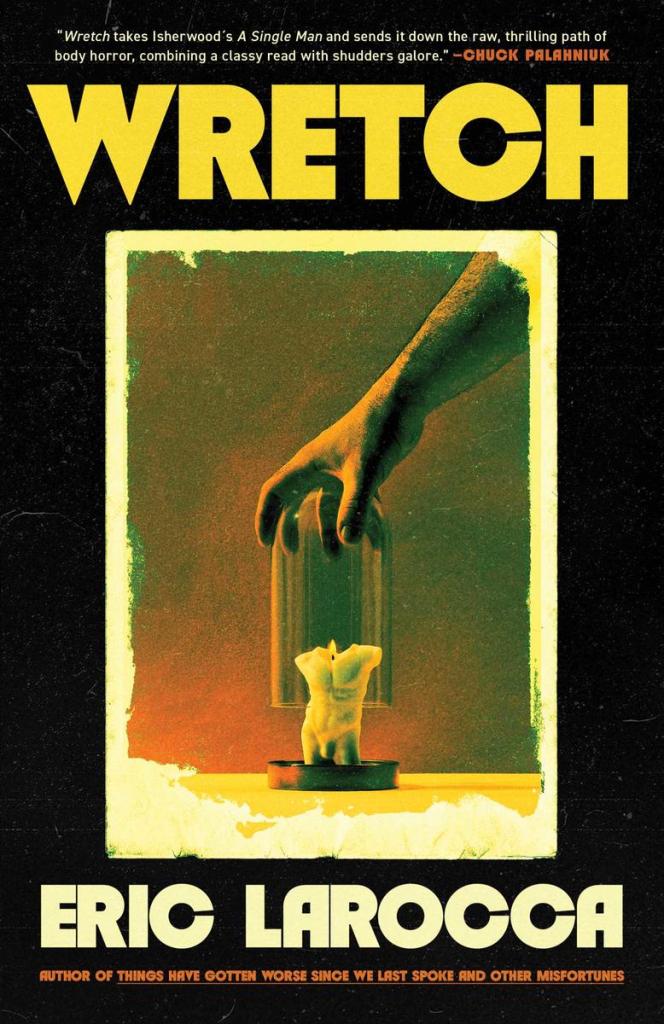
Trawling through Barnes and Noble while my car was getting serviced, I happened upon Wretch, a new release by Eric LaRocca. Now, I had read one of his books — Everything the Darkness Eats — and enjoyed its off-the-rails over-the-top goriness. It gave me old-school Edward Lee chills. Pulling up the Goodreads page now, I’m shocked, shocked! to discover the book receiving such low ratings. Even respected reviewers in the horror community failed to recognize the undeniable talent in our midst that is LaRocca. Sometimes I wish some of these influencers would influence some other genre than horror — romantasy, for example.
But, back to browsing in Barnes and Noble. I was scanning the new releases and pleased to see a horror title. I recalled I liked the author’s style and took a chance on the hardcover, which, in case you haven’t noticed, ain’t cheap anymore. The cover looked cool, the author’s Clive Barker dedication and opening quote intriguing, so I took a gamble.
Well, I wasn’t just pleasantly surprised; I was gruesomely enchanted!
Quick synopsis: Simeon (Biblical significance?) is grieving his dead spouse, Jonathan. Depressed and failing at work, he takes a leave of absence and, through a dark web chatroom, wanders into an underground society of the desperate and grief-stricken, a strange support group where members attempt to detect the images of their deceased loved one through photographs of inanimate objects and boring landscapes. Simeon attends awkward meetings with the Wretches, which is part Fight Club, part Order of the Gash—the author freely admits to these influences in the afterword—but he’s longing for something more. He wants his lover back, in the flesh, and he’ll do anything to make that happen. Be careful what you wish for, because Simeon is eventually led to a character named Porcelain Khaw, a dark entity (I kept imagining Pinhead) who promises reconnection, but at a stiff price.
Besides the general plot, which intrigued me, one thing I loved about this book was that LaRocca doesn’t play it safe with emotions. He’s honest about his main character’s shortcomings; his self-loathing in particular rings true. He doesn’t play it safe with the queerness either. Parts of this book reminded me of the shocking underground scene of downtown New York I recall reading about in The Village Voice. I tried to capture some of that underground scene that titillated and horrified my imagination in my horror thriller Fashion Victims. I still consider it one of my best novels, although tragically neglected.
But back to Wretch.
I applaud LaRocca’s brutal look at the self-hatred that can turn us into empty vessels searching for love to fill us while callously draining those who love us. There is a tragically melancholy subplot concerning Simeon’s rejected former wife and their neglected teenage son in a way that shows the selfishness of grief and obsessive love in general. The concept of “reverse haunting” could have been explored more, or perhaps I’m just unfamiliar with that sub-sub-genre. One flashback scene involving an alligator enclosure at the zoo left me baffled. If I was supposed to identify with the protagonist, that almost ruined it for me.
Yet, I couldn’t stop reading.
There are a few quick and painful “gotcha” twists at the end, reminding the reader that horror is, after all, a thrill ride, or at least it should be. I closed this book feeling very satisfied and determined to read all of LaRocca’s books. If Stephen King proclaimed Clive Barker the future of horror, LaRocca may have just picked up that mantle with Wretch. Let’s hope more writers daringly follow his lead. I certainly am inspired.

