Featured

Got an Hour? Write a Story.

After a bit of a hiatus, I’m back on Wattpad. I jumped ship for about a year while I tried out Kindle Vella (I decided it wasn’t for me), and now I’m back. I may try Vella again if I have a story that will do well on that platform. I sum up my thoughts on the subject below.

One of my writing goals for the year is to honor Heinlein’s Rules and to finish what I’ve started. Hear James DeFeo, and I discuss this topic on the Writing Fiction Podcast. Like many writers, I have a desktop folder filled with incomplete outlines, false starts, and more pre-made book covers than I care to admit. But at one time, all of these ideas held enough interest for me to at least start. Instead of moving on to the next shiny object, do I have the discipline and fortitude to discover what attracted me to this idea and find fresh inspiration in a forgotten project?

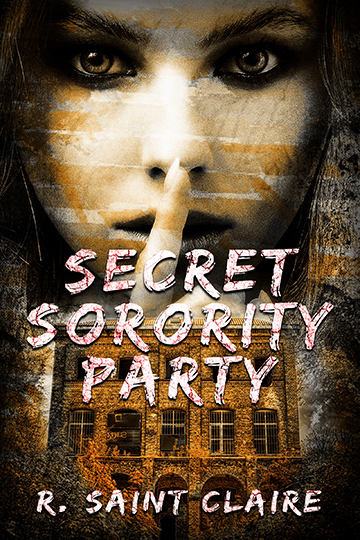
If I treat each of these projects like an epic novel (I do have one of those that I plan to finish this year), I might feel overwhelmed and discouraged, but if I treat some, not all, of these half-baked ideas as orphans worthy of love, I might get somewhere. First, some of these ideas and book covers may flourish as short stories or novellas. Yesterday, while scrolling through Wattpad, I discovered a creepypasta story contest with an approaching deadline. Did any of my unfinished projects fit the bill? It turns out one did. Galvanized by the approaching deadline, I gave myself an hour to write the flash fiction story. By hour’s end, I had a 1900-word draft I was happy with. I gave it another hour for editing, and voilá, I not only completed the two-hour writing challenge I set for myself daily, but I wrote and completed a new story. Not only that, I found a home for one of my orphans.

It feels good to finish something, mainly because it helps clear the deck for a treasure trove of more shiny objects. If you give yourself an hour (or two), you have a story. You may read mine here on Wattpad.
Reading and Writing for Pleasure

The unfortunate shift occurred when I decided to take my writing “seriously.” Like many of us scribblers, I began reading and writing at an early age. I filled reams of notebooks and diaries. I wrote because I needed to. The same with reading. I didn’t think about it. I just did it.

However, after I had several novels and writing awards under my belt, I noticed an unfortunate shift not only in my attitude about my own writing but also about reading. Suddenly, it felt like work. For a while, I deluded myself into thinking this critical approach would enhance my writing skills. After all, I was now developing a greater appreciation of important concepts like flow, plot structure, and style. My critical brain loved to dissect a paragraph as an editor might, often jotting notes in the margins or using my Kindle highlighter to mark certain passages. My critical brain loved highlighting eloquent prose and brilliant turns of phrase. But more often in was the shitty passages that would get my attention, a note to self of what not to do. With all that highlighting, I frequently missed the pleasure of getting lost in the story.

My critical eye turned on my own writing like an exacting tutor, hovering over my shoulder during my writing sessions. You call that a paragraph! Awkward! or even You suck!

Overnight, I became my own worst critic to paralyzing effect. I quickly discovered that work produced this way, if you can manage to get any words to stick to the page, is often stilted and boring and blah. Pablum par excellence and no fun to produce. No wonder it felt like work. When the things I enjoyed most in the world became chores to cross off a list, I knew things had to change.

As if Google read my mind (I’m pretty sure it does), a video appeared in my YouTube recommendations, and I spent the next several days devouring the videos of veteran author Wesley Dean Smith. Smith, who mostly writes Westerns, looks and sounds like he just stepped through a swinging saloon door. He’s written over one-hundred books, brags of making a good living at it, and lectures new writers on how he does it. His advice centers around Heinlein’s Rules. Robert A. Heinlein was a prolific pulp fiction writer who offered the following deceptively simple advice to aspiring authors:

  • You must write.
  • You must finish what you write.
  • You must refrain from rewriting, except to editorial order.
  • You must put the work on the market.
  • You must keep the work on the market until it is sold.

Most of us writers will come up short at that third rule, but there’s a lot here to consider. Smith also wrote a book about the method titled Writing Into the Dark. I discussed it in a recent YouTube video.

While binging on Dean Wesley Smith’s YouTube playlists, I came upon a video that supported my recent revelations about how I needed to shake my critical approach to reading and writing and return to doing both for pleasure. Smith asserts one should only read for pleasure. At least the first time through the book. Then, if you want to go back and note the author’s genius technique or dissect it for information about what not to do, you may. He advises one write the same way too, with the creative voice, NOT the critical eye.

My instincts agree wholeheartedly. I’m reading for pleasure again, and writing that way too. I’m not sure if it’s improving my technique, but it’s a hell of a lot more fun.


From Regina’s Haunted Library