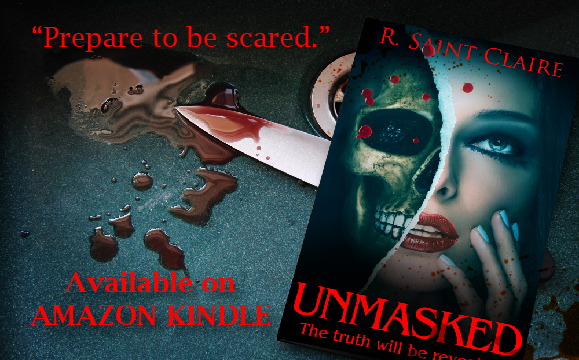
Got an Hour? Write a Story.

After a bit of a hiatus, I’m back on Wattpad. I jumped ship for about a year while I tried out Kindle Vella (I decided it wasn’t for me), and now I’m back. I may try Vella again if I have a story that will do well on that platform. I sum up my thoughts on the subject below.

One of my writing goals for the year is to honor Heinlein’s Rules and to finish what I’ve started. Hear James DeFeo, and I discuss this topic on the Writing Fiction Podcast. Like many writers, I have a desktop folder filled with incomplete outlines, false starts, and more pre-made book covers than I care to admit. But at one time, all of these ideas held enough interest for me to at least start. Instead of moving on to the next shiny object, do I have the discipline and fortitude to discover what attracted me to this idea and find fresh inspiration in a forgotten project?

If I treat each of these projects like an epic novel (I do have one of those that I plan to finish this year), I might feel overwhelmed and discouraged, but if I treat some, not all, of these half-baked ideas as orphans worthy of love, I might get somewhere. First, some of these ideas and book covers may flourish as short stories or novellas. Yesterday, while scrolling through Wattpad, I discovered a creepypasta story contest with an approaching deadline. Did any of my unfinished projects fit the bill? It turns out one did. Galvanized by the approaching deadline, I gave myself an hour to write the flash fiction story. By hour’s end, I had a 1900-word draft I was happy with. I gave it another hour for editing, and voilá, I not only completed the two-hour writing challenge I set for myself daily, but I wrote and completed a new story. Not only that, I found a home for one of my orphans.

It feels good to finish something, mainly because it helps clear the deck for a treasure trove of more shiny objects. If you give yourself an hour (or two), you have a story. You may read mine here on Wattpad.

In Defense of “Unlikable” Characters

Every day (or nearly every day) on the internet, we are treated to yet another unmasking of an insufferable a-hole. It’s usually a guy, and when he’s effectively canceled, the inevitable internet auto-da-fé ensues. Until he’s forgotten about–Russell Brand, anyone? –and the next insufferable a-hole enters stage left. The main character of my latest horror novel, CARNI, is that guy. Dag Altan, a successful journalist, gets canceled after his ex-girlfriend exposes his “abusive” behavior. I’m using scare quotes because it takes two to tango, and everyone has their side to the story. And because I’m writing from my character’s point of view, I’m on his side, at least for the story’s duration. And also, because I’m a woman who’s been accused of being “too nice” in the past and have certainly been stung by a few a-holes in my day, I quite enjoyed crawling inside the skin of an arrogant man and experiencing his side of things.

While I was tapping into my shadow self, exploring Dag’s character, or lack thereof, and having a damn fun time doing it, I was aware that I was composing the dreaded “unlikable character.” Does it help that Dag gets his in the end–big time? Apparently not. The readers have spoken and, except for a few outliers: they hate my main character, and therefore, some of them don’t like my book.
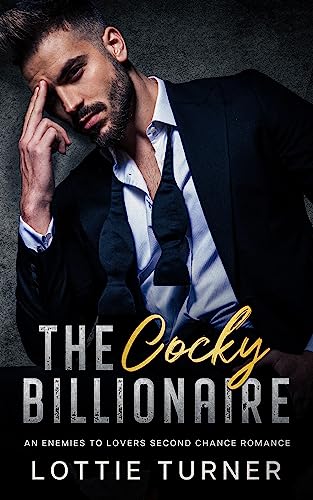
Fair enough, but despite this (small) chorus of disapproval, will I censor my creative impulses moving forward and consciously create more “likable” characters? Hell, no. For one thing, I love Dag. Yes, he’s an a-hole, but he has his weaknesses: mainly women. Behind the confident veneer, he’s a scared little boy. Does that make him somewhat lovable? Apparently not. Suddenly, I’m reminded of all those romance books with the “cocky” love interest.

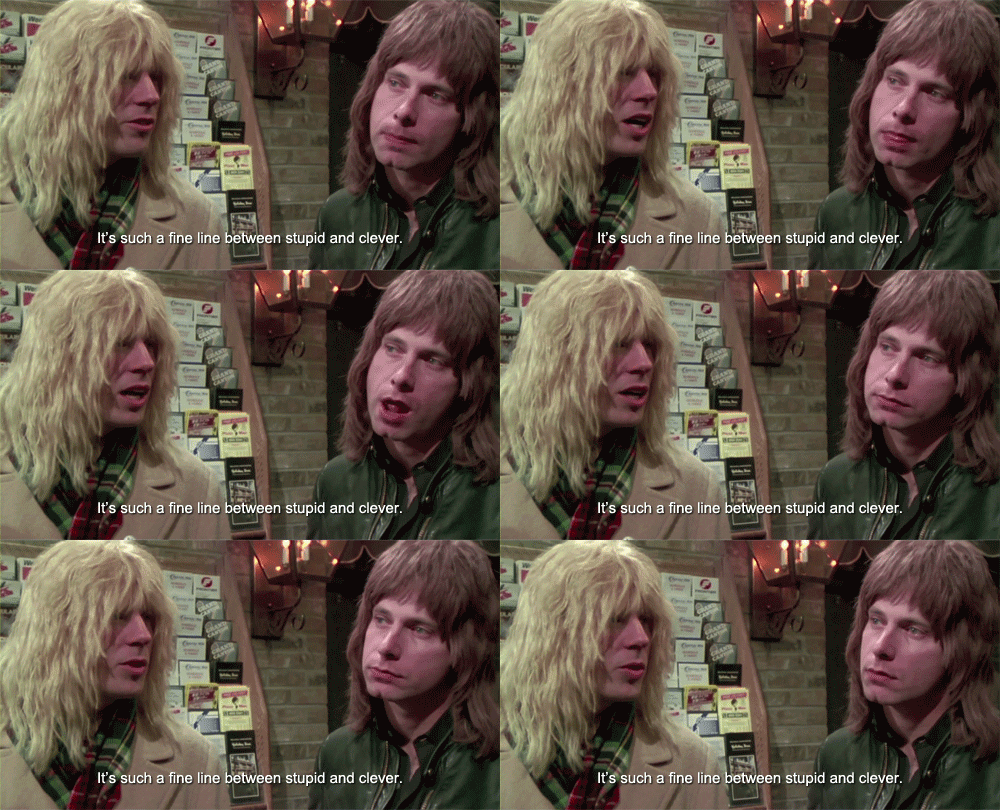
Anyone remember #cockygate? Why are those books featuring insufferable a-holes so immensely popular? To quote Nigel from Spinal Tap, they “did a twist on it.”

In that time-tested formula, the female character tames the wild beast, reining in his wild ways until he’s fully strapped into double harness and driven down the aisle toward wedded bliss. My story doesn’t quite turn out that way. It’s horror, which means it ends in death–like life. Mwahahaha!

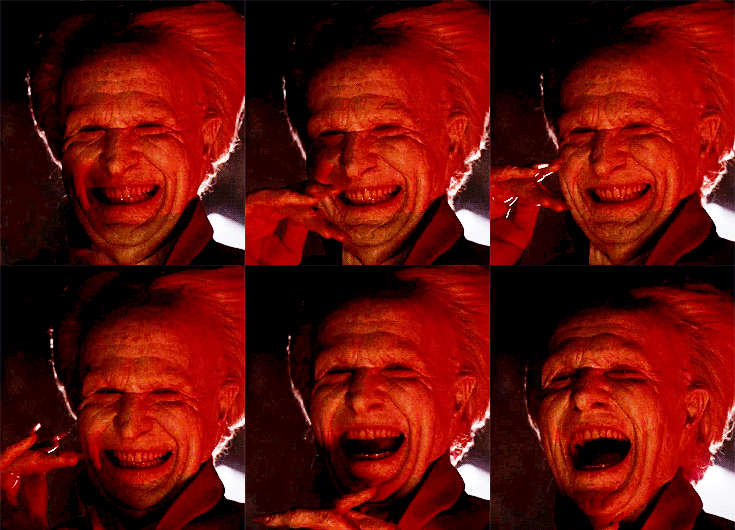
Is Drac cocky?


I write flawed protagonists. I always have. It could be because I am all too aware of my own flaws, fears, and, at times, incapacitating insecurities. But these are the treasures I mine when I write. So, no. I won’t stop adding to my stable of gargoyles. I can’t wait to release the next one from their lair.
Do you require a “likable” main character to enjoy a book, or do you, like me, realize we’re all pretty unlikable at our cores? I’d love to know what you think.

Curious about CARNI? You can pick it up for FREE today on Amazon Kindle.

Book Worms Call For Submissions!

Poetry, Fiction, and Essays for My Bloody Valentine Winter Issue

Book Worms Zine is selling out on Etsy and the reviews have been overwhelmingly positive. We have another issue planned for Winter 2024. This time around the theme is My Bloody Valentine: dark love stories, Tinder dates gone horribly wrong, bitter romance, a lover’s revenge, tragic love, etc. Dark humor is okay, but it should fit the themes of horror and romance. Specifically looking for original poetry (any length).

Submission Guidelines

Deadline: January 1, 2024

Payment is 8 cents a word for fiction and essays (1500 words or less). $25 – $50 per poem (depending on length). Includes one contributor copy.

No reprints or multiple submissions please, including poems. Exclusive rights for six months after publication.

ACCEPTING MAIL-IN SUBMISSIONS ONLY!

Mail your submissions to: La Regina Studio/Grundy Commons/925 Canal Street/Bristol, PA 19007

*In the past, we’ve made some special allowances for writers living outside the USA. But due to the overwhelming amount of submissions we receive, we are now only accepting mail-in submissions.

Acceptance notices are sent through email so there is no need to include a self-addressed, stamped envelope. Please include your email address with your submission. All submissions must be typed (cover letters preferred but not mandatory) and be properly formatted.

Be sure to check out the Book Worms Horror Podcast and follow us on Instagram.

One Year on Kindle Vella

Is it worth it?

Kindle Vella’s first anniversary has rolled around to little fanfare. Do readers even know about it? I probably wouldn’t if I didn’t have stories on the platform. I rarely participate as a reader–yet. That could change. Before Vella launched, I deleted my Wattpad account despite being one of the platform’s “star” authors and winning a Watty award. That decision was complicated, but mostly I closed shop on Wattpad because it was holding me back as a writer, meaning it was time to stop giving away my work for free and take a more robust leap into earning money for my creative efforts. In that respect, Vella has paid off handsomely. I’ve made thousands of dollars on the stories I transferred from Wattpad to Vella, however, most of these earnings came from Amazon’s bonuses, not organic readers. That score has been pitiful, as I imagine has been the case for most writers crowding onto that platform. The top performers on Vella either already have a solid readership base eager to follow their stories anywhere–I recognize a few famous names among them–or have a hell of a PR campaign. There may also be some organic growth there, especially among the evergreen romance genres. My epic fantasy story, Starlex, was one of the first of its kind on Vella and had a great launch, which unfortunately lost steam as more authors jumped on the bandwagon. If Amazon is encouraging uploads to grow its content base, it appears to be working.


I won’t attempt to decipher the Amazon algorithm, but based on the bonuses I’ve received, it seems to reward frequent uploads over organic reads. Completed stories become quickly dead in the water, which leads to the question of how best to promote them. Sales savvy authors will figure out a way, but most of us seemed to have drifted to the usual Facebook groups where “promotion” boils down to “I’ll read yours if you read mine.”

There is a fine line between showing another indie author “support” through authentic reads and scrolling through their content, marking each episode with a thumbs up, and posting a screenshot to prove you’ve “read” it. Authors can undoubtedly be readers of other indie works–I certainly am–which is where the fine line comes into play. I welcome another indie’s opinion of my work and am happy to do the same, but I don’t want someone “unlocking” my episodes in exchange for the same. I want readers who actually read my episodes and enjoy them. The practice seems very much like review swapping, which is not only against Amazon’s policy, but also pretty tacky. That’s not the way to find readers.
Vella’s future is difficult to predict. Amazon seems to have modeled some of Vella’s designs after Wattpad–the token system in particular, but their interactive features are lacking. The poll never works when I try to implement it, and I do miss Wattpad’s social interaction and direct contact with readers and other writers.


Has it been worth it? For the money I’ve earned, I suppose so. It will be interesting to see how Vella will develop and how many authors will drop out once the bonuses stop. I plan to finish up my fantasy series on Vella–I’m currently on book two–and maybe write some romances under a pen name as an experiment.
Do you have a story on Kindle Vella, or do you use the platform as a reader? I’d love to hear about your experience, so please leave a comment below.

Goodreads Book Giveaway

Red Masquerade by R. Saint Claire

Red Masquerade

by R. Saint Claire

Giveaway ends July 25, 2022.

See the giveaway details at Goodreads.

Enter Giveaway

Another NaNoWriMo Win and Why I Left Wattpad

It was down to the wire, but I was able to complete my NaNoWriMo project this year. It wasn’t the most ideal time to write a 50K word draft (is it ever?), but I was happy I didn’t give up. It will require another 20K words to flesh it out. I’ll get there, but until then, into the file drawer it goes.

I had fun writing my V.C. Andrews’ inspired melodrama, but there are a few other projects now requiring my attention. I hope that when I return to Black and Blue Ivy in a few weeks, it will be with fresh eyes and insights and I won’t run screaming with horror at what I’m reading.

Speaking of horror, I’m working on two projects now (besides getting Served Cold up and running). One is a short Christmas horror story I hope to have up on Amazon by next week, and the other is Code Red, the vampire novel for which I won a Watty last year.

I suppose now is as good a time as any to confess that I’ve left Wattpad for good. It is with no animosity. I was honored to win their top prize and to become a Wattpad “star,” but it got to the point where I wasn’t really growing on that platform. It was, however, a wonderful place to develop my writing skills and grow confidence.

My decision to leave was based on a few factors. One, I wasn’t participating as much as I used to and I found that another social networking platform was draining my time and energy. Two, after five years on the platform, I found there was little to no transfer of readers from that site to purchasing my books on Amazon. Even with over half a million reads and tons of active engagement with readers, I could barely convince them to sign up for my newsletter. Wattpad readers like to read stories for free. There’s nothing wrong with that, but I got tired of giving away my work for free, which leads me to reason number three. There comes a time when you’ve “‘practiced” enough and you need to enter a higher echelon of professionalism. In that respect, I felt that posting “good enough” stories on Wattpad was holding me back. In the month or so since I transferred two of my stories from Wattpad to Kindle Vella, they’ve already made over $500, so there’s that.

Still, I would encourage new fiction writers, as I was when I started five years ago, to consider Wattpad as a place to share their stories. I have no regrets for my time spent there. I just knew it was time to make a change. If everything goes as planned, Code Red will be released on Amazon in 2022, along with the seven or so other fiction projects I wrote during the Covid isolation months.

I’m looking forward to seeing what the new year holds.

NaNoWriMo – Prioritizing Writing

When it comes to my work schedule coinciding with NaNoWriMo, November, not April, seems to be the cruelest month.

I’ve participated in the novel-writing contest five times and “won” twice, although I completed all of those books eventually.

So with no one pressuring me except myself, I shouldn’t despair too much about my lagging performance in this year’s NaNoWriMo project, a gothic romance inspired by my love for V.C. Andrews titled Black and Blue Ivy.

Still, as always when I find myself in the middle section of any work in progress, frustrations set in. I’ve written enough to know those imaginary gremlins mocking me from computer screen, tempting me to scroll through Facebook or Instagram to “relieve some stress,” are part of the process.

I was definitely seduced by this beautiful new cover by Consuelo Parra.

Still, I have to concede it would have been far smarter to just complete my horror novel, Carni, instead of starting an entirely new project. Shamefully, I admit to being seduced by shiny object syndrome, the erroneous belief that a new project will not yield any of the angsts and frustrations I inevitably encounter any time I sit down to write, that somehow the words will effortlessly flow from brain to keyboard, perfection from start to finish. Of course, that’s pure folly which I’ve now discovered as I’m struggling to keep up with the daily word count of my new project while Carni (a killer clown ironically) taunts me from the sidelines.


Does it matter that no one is watching (or caring) and my mental gymnastics are mine alone to suffer?

Not really.

I am usually, creatively that is, quite productive, and although I write most days I do take off and then. For example, it doesn’t seem quite fair to force myself to remain in my monk’s cave and write when accepting a lunch invitation seems the better option. If wine is included then all bets are off.

What NaNoWriMo forces me to do (again, no one’s watching), is to make writing a priority, and therein lies the lesson.

Because of NaNoWriMo, I’ve stuck to an (almost) daily writing schedule despite being extremely busy. I don’t want to get overly confident and jinx myself, but even if I take Thanksgiving Day off, I think this year I just might cross the finish line.

How about you? Are you participating in NaNoWriMo this year? If so, feel free to add me as a buddy. We can spur each other on through the final stretch.

For weekly vlogs on the creative process and other topics, consider becoming a patron.


Write The Next Sentence

Working on a new novel is always a bit destabilizing. You start off with what you think is a good idea, hopefully enough to galvanize the process, but then you reach the dreaded three-quarter section slump. My novels do tend to be on the shorter side, but I don’t see this one concluding for another twenty thousand words or so. I know where I want the story to get to, sort of, but how to get there?

While procrastinating before my morning writing session waiting for the caffeine to kick in, I often amuse myself by watching YouTube writing videos. There are some good ones out there, as well as some really bad ones whose advice you should never take. But among the videos I do find useful are the ones by Dean Wesley Smith. I’ve mentioned him before; the reason I like his advice is that he’s a pro who’s been there. He also put the idea of “writing into the dark” in my head. I read his short book on the topic, but honestly, you can glean enough from the videos to get the message.

I’ve written the past two novels, including my current draft, into the dark and I will probably never go back to outlining again. It’s not an easy process, but it’s a much more creative one. By not knowing what is going to happen next in my story, I am tapping into my creative brain, not the critical one. Now, that doesn’t mean a writer can’t get extremely creative inventing an outline, and I have approached writing that way in the past. But if all the creativity is spent on the pre-write, then isn’t getting the words down just an exercise in filling in the blanks? Many successful writers, I imagine, prefer outlining, but I’ve found it much more satisfying—and scary—to write into the dark.

As I approached this morning’s writing session feeling my way around blindly, hoping to grasp something familiar that will guide me to the light of sudden inspiration, that “aha” moment every writer lives for, I took Smith’s advice to not think too far ahead. Just write the next sentence and then write the next one.

So, I did that until I had written 1700 words in less than an hour. I feel pretty good about it, and not only that, during my writing into the dark session I found an entry point to the next scene I hadn’t thought of before. This is the value, and the joy, of discovery writing. It’s the essence of creative writing. When you get stuck, just write the next sentence.

It worked for me. If you’ve ever tried this approach or if you’re dead set against it, please leave a comment below. I’d love to hear your thoughts on the subject.

For weekly vlogs on the creative process, including writing into the dark, consider becoming a Patron.


Read What Thou Wilt

Last week, I wrote a blog post about intuitive writing, a concept I’m finding useful while working on my current writing projects.

Yesterday, I finished a short story for a new BookTuber anthology that will be coming out in a few months. It took me about a week to get it to where I needed it to be. As many fiction writers know, short stories can be more challenging than full-length novels. I’m never completely satisfied, but when I find myself changing back things I already changed in the editing process, I know it’s time to let it go. Also, finding a reliable proofreader is always a challenge. Anyway, it’s gone through the internet chute and now I’m back to writing my new horror novel, which I will be attacking this week with a daily 3,000-word count—my goal is to finish it by the fall. But Sunday is my blogging and reading day so here I am.

Yesterday, I posted a video about what I’ve been reading lately, bemoaning the fact that I’m no longer accepting ARC copies to review because I don’t want my reading to feel like a chore. I want to support indie authors, but at the same time, I’m not really a reviewer. Or rather, it’s not my ambition to establish myself as a book reviewer per se. I’m just a lifelong reader who likes to discuss books. I like to hear what other people are reading too. I’m an emotional reader and I’m not ashamed of it.

Just recently, one of my favorite BookTubers with a popular channel put out a statement to defend his right to “pleasure read” after being criticized for not reading the books authors sent him. As an indie author myself, I empathize with trying to draw attention to one’s book. A positive review from someone with a large platform can create a real buzz. As someone who does both, writing and BookTubing, I am flattered when one of my books gets reviewed by a peer. But I don’t push it because I know what it feels like from the other end. Nothing makes me resist reading more than feeling forced into it. I’m sure I’m not the only one who feels that way. If I wanted to subject myself to compulsory reading, I’d go back to school.

My reading tends to be all over the place and I’m okay with that. To illustrate, I am currently reading Moby Dick in tandem with a V.C. Andrews pulp novel. I love them both! Like many of us, I think of reading as my great escape. I can get into a seafaring adventure story as much as a family melodrama. As a commenter on one of my videos recently pointed out, if someone can watch several TV series at once (and most of us do) then why not read several books at once? He’s right, of course. Sometimes you want a little pulp, sometimes something more substantial. Both are valid if you enjoy them.

It’s good to remember the readers’ bill of rights: read what thou wilt.

Kindle Vella – a Writer’s (and Reader’s) Perspective

Amazon’s new episodic fiction platform, Kindle Vella, launched last week, and a lot of writers have already jumped on the bandwagon, myself included. So, let’s take a look at how Vella is stacking up against what I imagine is its chief competitor: Wattpad.
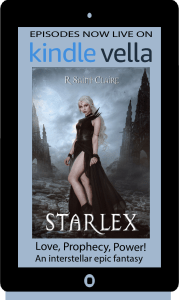
As a Wattpad star and Watty winner, I’ve had a lot of success on that platform and have enjoyed the experience every step of the way. I especially enjoy the social interaction on Wattpad. It’s fun to chat with readers in the comments and offer suggestions to other writers via book clubs and contests. Politeness and positivity are encouraged.

Wattpad started as a free reading platform and has slowly adapted its business model to include a paid membership (no ads and a choice of profile color) and now offers paid stories redeemed with purchased “coins.” The latter seems to be Amazon’s inspiration for Kindle Vella, an app where readers may access stories (the first three episodes are free) by purchasing tokens. Additional features include author’s notes at the end of each episode. Readers may voice their approval with a thumbs up or by rewarding their favorite story with a coveted crown by redeeming tokens.

Caught up in the hype and eager to get in on the ground floor like many of my fellow authors, I uploaded the first eighteen episodes of my epic fantasy Starlex to Vella. The multi-character POVs and various plotlines seemed ideal for serialized fiction. For my launch, I did the requisite email blast and ran some Facebook ads. But after all the effort, my story is pretty much dead in the water. Not even a crown! (cue sad queen face).

Scrolling through the comments on some of the Facebook groups I belong to, I see that I’m not alone in my struggle to find readers. Part of the problem, for me perhaps, is that I’m trying out a new genre. I usually write horror so there hasn’t been much reader transfer. It’s also possible that readers haven’t yet discovered the new platform despite all the promotion authors have been doing, or maybe there is just too much damn competition. I’ve already detected notes of despair among some authors’ comments, some already expressing a desire to give up. Maybe there is too much expectation to strike Amazon gold. I went in with the attitude of experimentation so I am fine with diligently updating my story every few days along with a Facebook post boost expecting little returns and being pleasantly surprised if someone discovers my story.

Depressing? I suppose that depends on one’s perspective and is a topic for another blog.

On to the Vella reading experience. Stories are divided into episodes (akin to Wattpad’s parts vs. chapters). Leading up to Vella’s launch, there were plenty of discussions in the Facebook groups about how serial fiction differs from a standard novel approach. From the stories I sampled there doesn’t seem to be much distinction. There is, however, a lot of talent on display here. The stories I read were decent genre fiction I hope will attract a readership.

Comparing my reading experience on Vella to Wattpad, I have to say Wattpad wins out on two fronts. One, Wattpad offers a clever feature where the reader is shown how much time is left in the chapter. This is useful, like Kindle’s progress feature, for readers to gauge if they want to stick out the chapter (part, episode) or put it down for now. Vella’s episodes vary from 500 to 6,000 words so there is a lot of range. Coins are redeemed according to word count.

The second drawback is the reader’s inability to leave comments. After giving a thumbs up, I found myself returning to the Facebook groups to give a quick take on what I read and to offer words of encouragement, the same type of give and take that is part of the Wattpad experience. There are many conversations happening on Facebook that could be taking place on Vella. Vella does offer readers opportunities to leave a review (stars and comments) in typical Amazon style and there is apparently a return policy where readers may redeem their tokens if they’re unhappy with the story. Authors understandably are already taking issue with this feature given readers may read the entire story before requesting a return. Obviously, there is still some tweaking to be done.

So, what is your opinion? Are you checking out Kindle Vella as a reader or writer, or both? I would love to hear your thoughts in the comments. If you have any favorite stories to share, please let me know. I believe online fiction sites will continue to develop, hopefully offering more opportunities for writers to share their stories. But is there any real money to be made? Time and talent may tell.

More Writing Advice: Believe in Yourself

Because no one else will.

At least not at first.

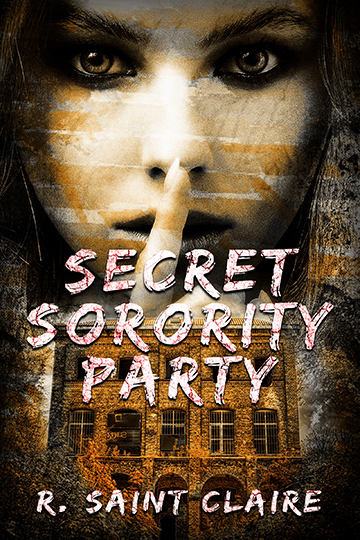
Late last night, after working my “day job” as a theater “roustabout,” I received the fantastic news that my screenplay, Unmasked, was chosen as a finalist for the Best Horror Feature Screenplay Award at the Oregon Scream Week Horror Film Festival. A few months ago, on a whim, I entered my screenplay into a bunch of film festivals. So far, I’ve heard back from two. It won fourth place at The International Horror Hotel, and now it’s up for another award.

Look for rainbows and you’ll find them.

I’m thrilled! Unmasked was the first feature-length screenplay I ever attempted to write, the first draft produced in a weekend fever dream over a decade ago. Since then, I’ve written many novels and other works, but Unmasked convinced me I could do it.

I don’t think there is one writer, professional or novice, who doesn’t feel a level of terror when facing the blank page. I’ve written about this before. There is always trepidation, the fear that you can’t do it. The only way to prove to yourself that you can do it is to sit down and do it.

Easy right? Not really. I think what holds most creatives back, and I’m certainly not immune, is that it takes a great deal of self-belief even to attempt a creative endeavor, let alone complete it and work it to some level of competence. Framed another way, you’ll never prove to yourself how incompetent you really are unless you try. The dreaded I suck! fear is probably the number one reason most of us make excuses about why we can’t do something.

I’m telling you, you can. But it takes work. And practice. Most of all, it takes belief in yourself. We’ve all seen examples of mediocre talents who’ve gone on to have tremendous success because of their unwavering confidence in their abilities. They shake off criticism like a dog after a dunk; they keep pushing forward no matter what. As annoying as some of these creatives are—Madonna, I have you in my sights—you have to admire their tenacity.

Conversely, there is another type of which many of us are all too familiar. You may count yourself among them. I’m referring to the creative person with immense talent who never seems to complete any project, or worse, has a self-destructive bent. I’ve seen it manifest in many ways. In fact, I’ve explored that destructive messaging myself in my work, including UNMASKED, which is essentially a horror story about a dysfunctional family. I know the territory all too well.

If you can turn your pain into art, people will respond to it.

Believing in yourself means showing up for work every day without expecting any accolades. Keep working and keep pushing forward. People will start to notice. You’ll gain fans and maybe even turn it into a lucrative venture. I’m still waiting for the latter, but in the meantime, I’ll keep working on it every day because I love it. If you are struggling with your creativity, start with self-belief and let the rest of the world catch up.

Read UNMASKED